Have any questions?
Call (276) 601-3208
RiverTrail Technology
|
Call (276) 601-3208


When business leaders map out their technology budgets, attention naturally gravitates toward major hardware overhauls or critical cybersecurity defenses. However, a significant portion of operational cash flow often slips away through a much quieter avenue: unmanaged IT service agreements and unused software subscriptions.
When we serve our clients, we specialize in proactive technology support and IT management, helping local organizations audit their systems, eliminate waste, and optimize their digital infrastructure.
Managing a technology budget is incredibly frustrating right now. Technology costs are higher than they have ever been, mostly because software companies have shifted entirely to recurring subscription models. You look at your monthly IT bill and feel like you are burning cash, yet your team is still complaining that things are slow or frustrating to use.
Just throwing more money at the problem rarely solves it. Sometimes the smartest move you can make is to stop buying new things and focus on using what you already have in a more effective way.

Many organizations fall into the “jack of all trades, master of none” trap with their business technology. When seeking a competitive edge, the instinctive response is often to open the checkbook and subscribe to whatever hot new thing is trending in the industry. This is the wrong approach, because true operational excellence is about strategy, security, and execution.
To truly outperform the competition, organizations must look inward and optimize the infrastructure they already possess. Here are five strategies to turn your existing technology into a distinct competitive advantage.

Delaying technology upgrades until hardware or software breaks completely is a common practice for many small business owners. This approach feels financially conservative, but it actually creates an unhedged operational liability. Choosing to hold off on necessary infrastructure improvements creates predictable risks that eventually disrupt daily operations and drain financial resources.

Every technology provider has a list of core values on their website. They use words like efficiency, innovation, and speed. And while we use these outcomes as much as anyone, we want to be completely candid about the ultimate boundary line in modern IT. Today, there’s a constant tug-of-war between security and convenience.

When you look at a laptop that might be getting a bit older, and then look at the price tag for a replacement, you may be tempted by thoughts along the lines of, “If it ain’t broke…”
The problem is that older devices don’t need to break to create a drain on your business’ budget. They don’t even need to crash. All they need to do is slow down your employees.

Business technology support has transitioned from a localized physical presence to a distributed digital infrastructure. This shift represents more than a change in how software is managed; it marks a fundamental change in how IT creates value for an organization.

Your team isn't being defiant when they ignore your new software, and they certainly aren't lazy. They are suffering from technology fatigue.
Very few people get excited over technology these days. Sure, it is nice to get a flashy new smartphone, but in the office, a new piece of software rarely feels exciting. To your staff, it just feels like another login to remember, another dashboard to check, and another interruption in an already busy day.

A lot of business owners cite one of the necessary evils they need to deal with is a sunk cost their technology brings, putting it right next to the office lease or the electric bill. You pay it because you have to keep the lights on, not because you expect it to help you win a new contract or sleep better at night.

For many, technology sounds like an expensive line item that involves a lot of confusing jargon and regular updates. In 2026, the most successful business owners don't look at tech as a cost—they look at it as a revenue engine.
If you’ve ever wondered why some companies seem to grow effortlessly while others stay stuck in the daily grind, the answer usually lies in how they use their tools. Here is the layman’s guide to how the right technology builds revenue and pays for itself faster than you might think.
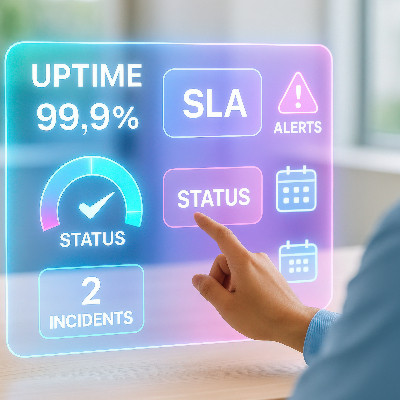
If you could look into the future and see your business with 99.9 percent uptime, what would be the first thing to go through your brain? We imagine it would be something related to the incredible growth that such a feat can bring about, as well as instant relief that technology troubles have effectively become a thing of the past. Today, we want to look at what this uptime could look like for your business.

What does “the office” mean to you? Is it a physical location, or is it a set of digital tools for getting your work done? With the tug-of-war between “fully remote” and “back in the office” policies, it’s clear that businesses need to concede to a certain degree. The “hyper-hybrid” model is one that treats your office not like the center of your business universe, but a single point on a high-performing network.

If you feel like your smartphone just got a whole lot smarter, you’re not imagining it.
We’ve officially moved past the era of "there’s an app for that" and entered the era of "the phone does it for you." For IT leaders and service providers, 2026 isn't just delivering flashy consumer gadgets; it’s delivering a fundamental shift in how your team interacts with data, security, and the physical world.
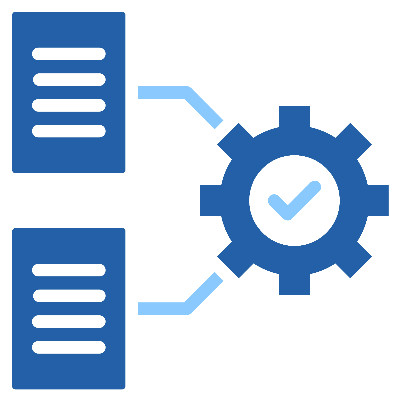
Efficiency in business is often about simplicity. In the world of technology, the more varieties of devices and software you have, the more things can go wrong. If you want your office to run smoothly, you need a strategy called standardization.
To paraphrase the titular character’s philosophy from the 1986 dramedy Ferris Bueller’s Day Off, technology moves pretty fast… if you don’t stop and look around every once in a while, you might miss it.
We’ve already seen technology take major strides this year, with many innovations offering utility in business settings. Let’s discuss five, and how they could impact the technology we use in the future.
In business, technology is a lot like the weather: if you don’t like it, wait five minutes and it’ll change. For a small business, those changes don’t always feel like a refreshing breeze, they feel like a localized thunderstorm inside your server room.
When you’re busy growing a company, you shouldn’t have to play amateur sleuth to figure out why the Wi-Fi is acting up or why the printer is speaking in riddles.

If left as is, AI will tell you what you want, albeit in the very literal sense. It’s easy to misdirect it or send it down rabbit holes that eat up significant time and money for your business. If you want to make full use of AI, reduce hallucinations, and be more productive with these incredible new tools, you need to master the art of prompt engineering.

How many tools on your infrastructure don’t play well with others? Do you just look for the next quick fix rather than build out a system of interconnected apps that all work in tandem to support your business efforts? If you don’t put in considerable effort in this regard, it could negatively impact your operations and create tech debt that’s hard to recover from.
If you walked into a typical office in 1996, you’d be met with a symphony of sounds: the rhythmic clack-clack of mechanical keyboards, the whirring of cooling fans, and the legendary screech of a 28.8k modem struggling to connect to the World Wide Web.
Let’s step into the time machine and see what the tech stack looked like thirty years ago.

Have you ever considered if cryptocurrency is a viable payment option in a business setting? Now that digital asset markets have grown and there are now regulated stablecoins, the situation is more professional than before, but there are still risks associated with this payment option. Let’s go over the pros and cons of adding digital assets like cryptocurrencies to your checkout and payment flow.
Learn more about what RiverTrail Technology can do for your business.
RiverTrail Technology
103 North Monroe St
Galax, Virginia 24333
You can return any item purchased on our website within 30 days of the purchase date.